4 Hugues Ross - Blog: Javascript
Hugues Ross
Showing posts with label Javascript. Show all posts

7/13/16

Listening to Your Javascript

It's been a while, but I haven't been idle. I've made a great amount of progress on Singularity, and I've finally discovered a secret that has eluded me for years!

The Problem

These stories always have to start with a problem. In this case, the problem was a seemingly simple one:

"When the user interacts with Singularity's WebKitGTK viewport, how do I make the app react to it?"

This used to be really easy, back in the days of Webkit 1. However, when Webkit2 changed the API and moved some functionality to it's web extension API, Javascript support followed suit. For a long time, the only solution was to simply create an 'extension' that used some form of IPC to communicate with the main app, but I didn't want to do that in Singularity. Instead, I used a crude hack by encoding messages in URL requests.

A Tentative Solution

Needless to say, this solution is slow and terrible, but I've found a better answer. At some point since my work on Singularity started, WebKit introduced the UserContentManager, which can apply custom CSS and Javascript to web pages. This is a really awesome feature that I plan on using in future projects, but it also provides me with a new tool, a signal for handling certain Javascript calls. According to valadoc.org:

public signal void script_message_received (JavascriptResult js_result)
"This signal is emitted when JavaScript in a web view calls
window.webkit.messageHandlers.name.postMessage()
after registering name using register_script_message_handler"

In other words, it lets you set up a callback that is called whenever a script calls a certain function, sending arbitrary data from the web page to the application displaying it. This is a really powerful feature.

So powerful, in fact, that you can't actually use it in Vala.

What Gives?

As it turns out, Vala's JavascriptResult class has no useful functions or properties. I'm not entirely certain why, given the solution that I'm about to provide.

While WebKitGTK's JavascriptResult does contain the necessary functions, no Vala bindings exist for them. Instead, you need to access them from C and return whatever result your app is expecting. This seems really odd, and I hope I don't have to find out the hard way later on, but for now I'm feeling pretty good about this.

I'll be posting an update with a more thorough rundown of my work on Singularity soon.

5/6/16

Console Programming 8-Week Project: Bringing DFGame to the web

This semester, I posted twice about console programming projects. They were small, carefully scoped projects to help me get a jump-start with DFGame. Now, it's time for the big reveal: My final, 2-month long console programming project. That's right, I

PORTED DFGAME TO HTML5/WEBGL

Yes, all of it.

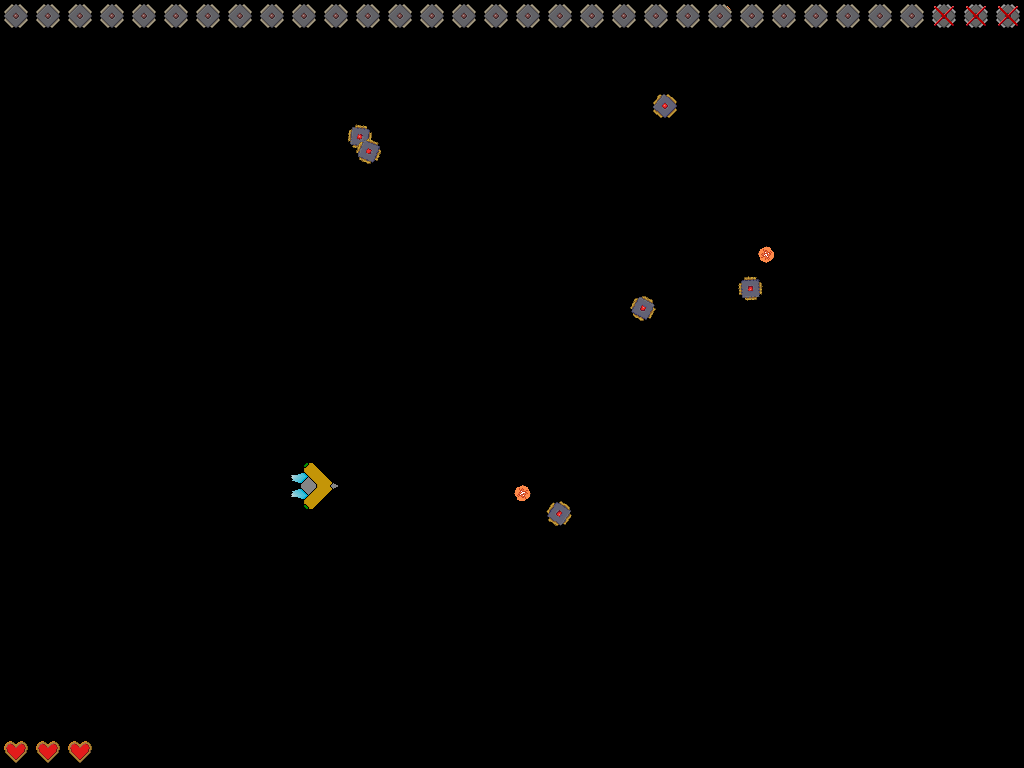
One of the requirements for Console Programming is to develop at least one project on an unfamiliar platform or with unfamiliar tools. I decided to try my hand at developing a web-based game framework that was fully compatible with DFGame. The project was a big success, and I actually have a playable demo up on my site (based on the demo I produced for my previous project).
You can check it out here. (Note: you need a relatively recent version of a modern web browser such as Firefox or Chrome. IE won't work and Edge/Opera/Safari are untested)

Now, let's talk a little bit more in-depth about the project.

History

When I originally kicked off this project in class, I had much bigger aspirations. My original goal was to port both DFGame and Halberd, then add an HTML5 export option to Halberd's editor. Obviously, that was way out of scope. After a week or two, I decided to scope down to only porting DFGame, and that's what I stuck with throughout the project.

I wasn't sure how much of a demo I'd be able to put together, but I managed to complete the DFGame port quicker than expected and ended up with a couple of spare weeks to work on the demo.

The current demo doesn't have a title screen or audio in it, but is otherwise mostly indistinguishable from the desktop version.


Now, let's talk about the platform in general, and weigh the pros and cons of the platform.

Pros

  • This setup is mostly cross-platform. I don't have to worry as much about weird edge-cases, at least compared to developing native Windows and Linux versions of my games.
  • The games that I make with this are more accessible in general. There's no need to download an executable, just load up a link and play.
  • Since the library draws to an HTML5 canvas, I can pretty much embed DFGame into any web page that I want.
Those are some pretty good benefits. However, there are some pretty big problems with it as well.

Cons

  •  Unlike the C version of DFGame, all IO is required to be asynchronous. This isn't necessarily a bad thing, but it means that I need extra boilerplate to ensure that the right assets are loaded before the game begins.
  • The actual performance of DFGame is way lower when using the HTML5 version. This is to be expected, of course--You can't really compare raw C to embedded JS, especially not in web browsers with single-threaded renderers, such as Firefox's current release. Chrome currently gets way higher FPS than Firefox, but it still lags if enough is happening on-screen.
  • The WebGL API is currently outdated, compared to the current OpenGL and OpenGL ES standards. As far as I can tell, WebGL is still locked to the GLSL 1.0 standard, compared to 4.3 in GL and 3.2 in GLES. As a result, I need to rewrite all of my shaders whenever I move something over.

Further Work

Despite the problems with developing HTML5-based games, I'm actually pretty happy with the result. I think it's worth my time to continue developing and using the DFGame port, especially for game jams and other simple prototypes.

The port is currently behind, because I've been recently developing DFGame some more. I'll be posting about some of the new improvements soon. I also want to look into optimizing for WebGL better. I can't get a comparable framerate to the C version, but maybe I can eke out some more performance out of the web.

Lastly, I want to polish the demo some more. If I get it into a good enough shape, I think it could make a good portfolio piece. For now, I'm going to let it sit in a dark and dusty corner of my site until it's properly finished. Hopefully I'll have more time to do that now that my finals are over.